










2001水俣ハイヤ節練習会―2001水俣ハイヤ節を踊ってみた!
2001水俣ハイヤ節練習会―2001水俣ハイヤ節を踊ってみた!
2001 Minamata Haiya-bushi Practice Session – Tried Dancing the 2001 Minamata Haiya-bushi!
水俣ハイヤは、2000年から2001年にかけて、漁師で水俣病患者で踊りの名手だった杉本栄子さんと東京の民族舞踊団の荒馬座が共に創った、水俣オリジナルのハイヤ節踊りである。20世紀の水俣病の労苦と悲しみを経て、「21世紀から一緒に新しい時代を作りましょう」という思いを込めて作られたという。「もやい直し」を呼び掛けた吉井市政の最後の時期に作られた踊りだ。
Minamata Haiya is an original Minamata-style Haiya dance created between 2000 and 2001 by Eiko Sugimoto, a fisherman, Minamata disease patient, and talented dancer, together with the Tokyo-based folk dance troupe Aramazza. It was made with the idea of going through the hardships and sorrows of Minamata disease in the 20th century and saying, ‘Let’s create a new era together from the 21st century.’ The dance was created during the final period of Yoshii’s city administration, which promoted the concept of ‘Moyai-naoshi’ (rebuilding ties).
 2000年代最初のころには、一時期は、水俣のすべての小学校で子供たちが踊っていたけれど、コロナ禍があったり、学校の人手不足などの中で、今では、踊り続けている小学校は減ってしまい、袋小学校だけが毎年踊り続けている。袋小学校の生徒たちは、水俣音楽祭で毎年披露したり、火のまつりで踊ったり、様々な水俣のイベントで演舞をし、昨年のスローフード大会では、それを見た熊本県の木村知事が号泣されたというほど、本当に心に迫る踊りと歌を見せてくれる。
Back in the early 2000s, there was a time when kids at every elementary school in Minamata were dancing, but with the COVID-19 pandemic and staff shortages at schools, the number of schools that keep dancing has decreased, and now only Fukuro Elementary School continues to dance every year. The students at Fukuro Elementary perform at the Minamata Music Festival every year, dance at the Fire Festival, and perform at various events in Minamata. Last year, at the Slow Food event, their performance moved Governor Kimura of Kumamoto Prefecture to tears—it’s really a dance and song that truly touches your heart.
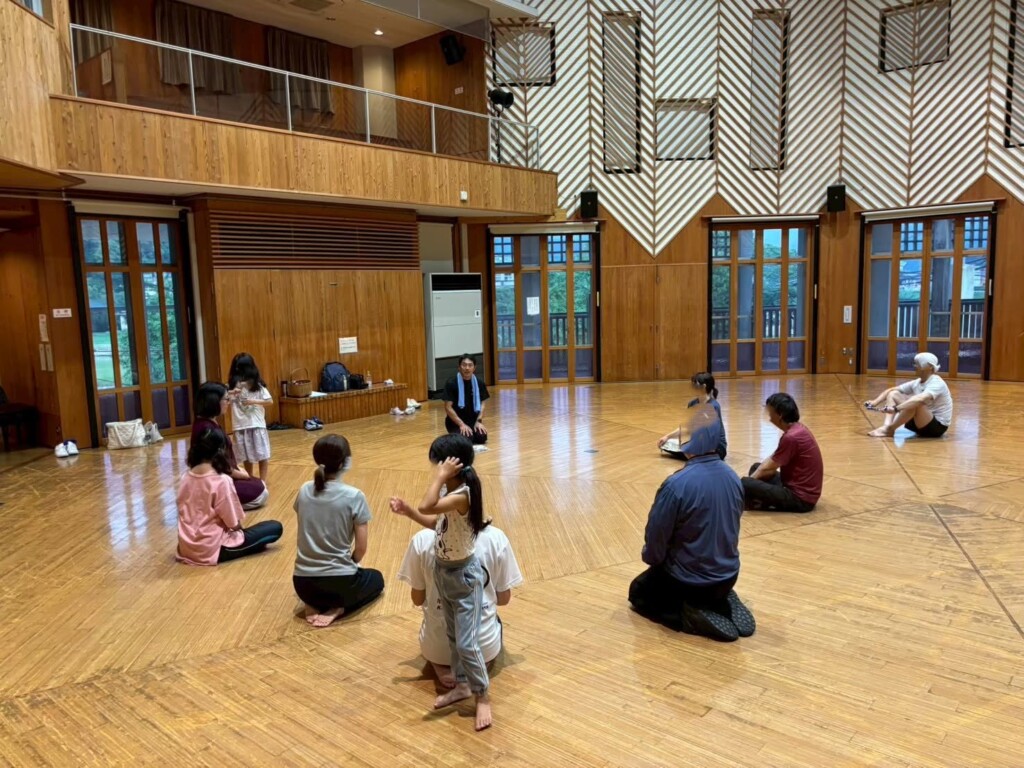
さてそんな中で、水俣ハイヤ2001を袋小学生だけではなくて自分たちも踊りたい! 自分たちの子どもにもできれば躍らせたい!という大人たちが立ち上がった。今年10月下旬、10年ぶりに荒馬座が水俣に公演にくるのだが、その時に一緒に踊ることを目指して、地域の大人たちの有志も練習しはじめた。荒馬座公演実行委員会の呼びかけで実現した。
So in that situation, not only the kids from Fukuro Elementary wanted to dance the Minamata Haiya 2001, but also some adults thought, ‘We want to dance too! And if possible, we want our own kids to dance as well!’ So they stepped up.
This late October, Arumaza will perform in Minamata for the first time in ten years, and aiming to dance together at that time, local adults who volunteered also started practicing. This happened thanks to the call from the Arumaza Performance Executive Committee.
なんと、講師は、杉本栄子さんの長男で、水俣ハイヤ2001のお披露目のときにもお囃子を担当された杉本肇さん。今も袋小学校に魂入れから指導までを行っていらっしゃる。2026年6月26日、7月26日、8月11日、9月26日の4回にわたり大人の練習会が開かれた。8月11日には、この踊りを栄子さんと一緒につくった荒馬座の宮河伸行さんが直接教えてくださった。
Believe it or not, the instructor was Hajime Sugimoto, the eldest son of Eiko Sugimoto, who also handled the music for the Minamata Haiya 2001 debut. He still teaches and guides at Fukuro Elementary School from the soul of the performance. Adult practice sessions were held four times on June 26, July 26, August 11, and September 26, 2026. On August 11, Nobuyuki Miyagawa from Arumaza, who created this dance together with Eiko, taught us directly.
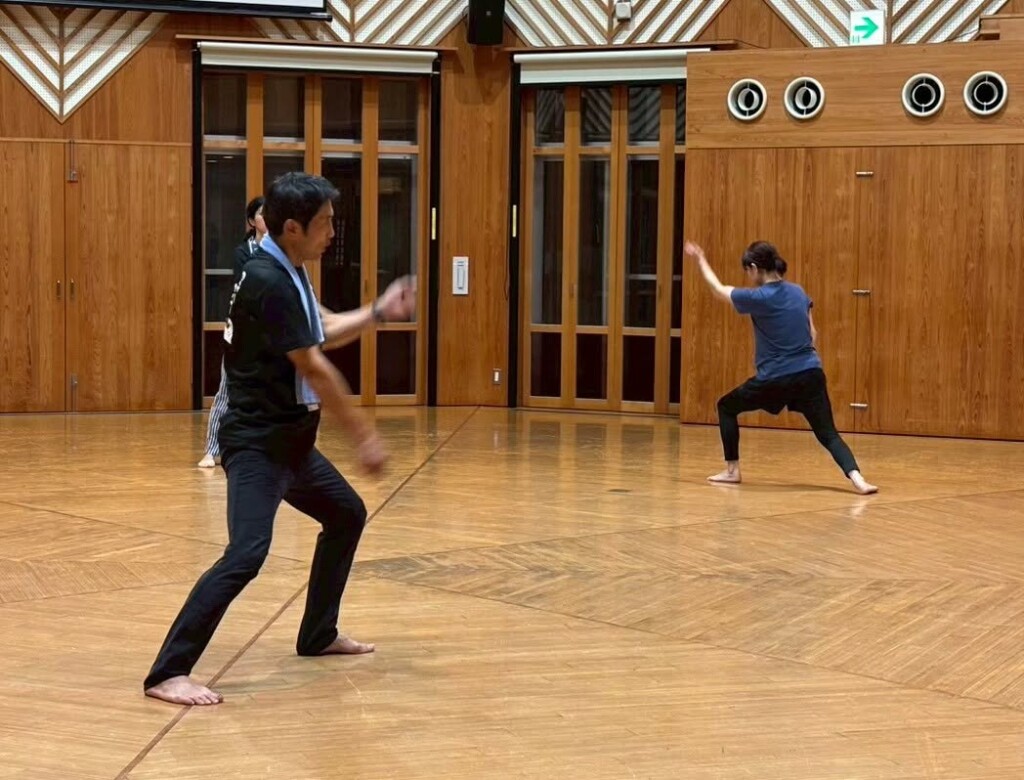 水俣ハイヤ2001はすごい。畑仕事をしている漁師たちが、魚が来ていることを知らせるほら貝の音に導かれて、山を下りてくるところから踊りが始まる。今日は大漁じゃろか、どんなじゃろか、とワクワクした気持ちで山を下りる。そこから最初の動きは、左手右手を交互に目の前にかざしながら海の方を見るしぐさ。「目の前に手をかざすのは何をしているかわかりますか?」と宮河さん。
Minamata Haiya 2001 is amazing. The dance starts when fishermen, who have been working in the fields, follow the sound of conch shells signaling that the fish are coming down from the mountains. They come down with excitement, wondering if today will be a big catch or what it will be like.From there, the first movement is a gesture of holding your left and right hands alternately in front of your face while looking towards the sea. “Do you know what you’re doing when you hold your hands in front of your face?” asks Miyagawa.
参加者「大漁かなって見てるんですかね?」
宮河さん「おしい」
参加者「太陽がまぶしいから、目の前に手をやっているんですかね」
宮河さん「それもあるかな、おしい」
との問答のあとで、正解は・・・「風の色をみているそうです!」
「はい???」
漁師さんたちは、風の色を見て、海の色を見て、漁をしていた、とのこと。
Participant: ‘Are they looking to see if there’s a big catch?’
Miyagawa: ‘Close.’
Participant: ‘Maybe because the sun is dazzling, they’re putting their hand in front of their eyes?’
Miyagawa: ‘That’s part of it too, close.’
After that back-and-forth, the correct answer is… ‘Apparently, they’re looking at the color of the wind!’
‘Huh???’
Apparently, the fishermen would check the color of the wind and the color of the sea before going fishing.
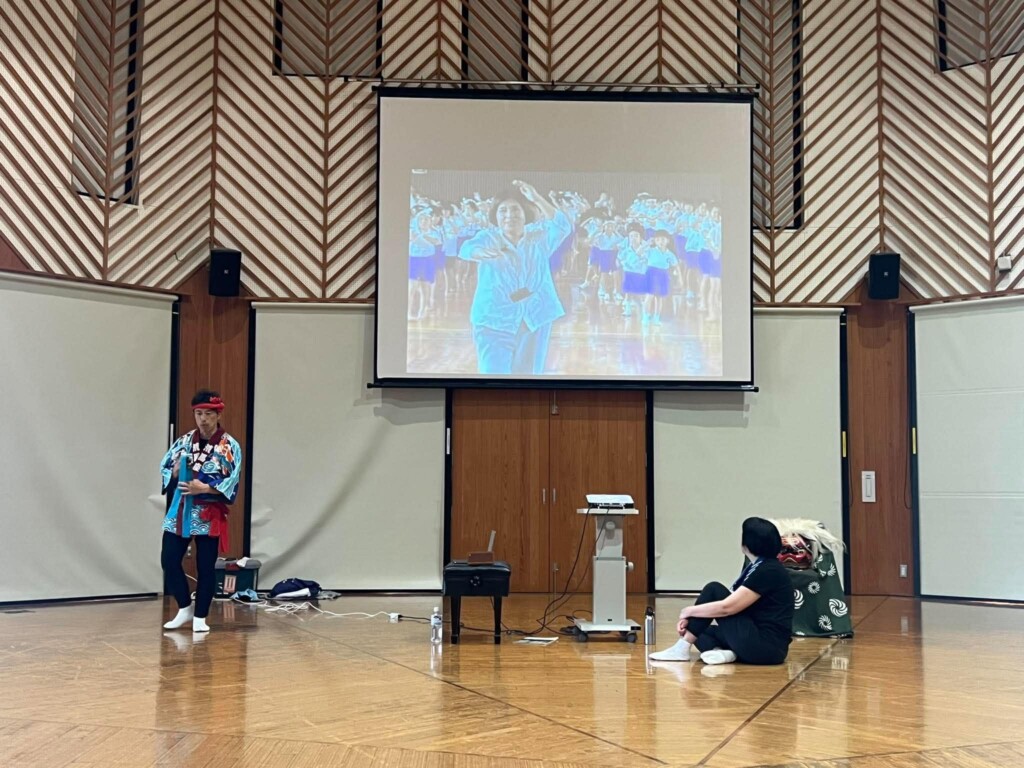 帆船の帆を降ろす動き、網を曳く動きに加えて、「餅を投げる」動きがある。漁師さんたちは新しい船の進水式のとき、海の安全、大漁を願い、感謝をし、地域の方々に福を分けるために餅を投げたそうだ。
それだけではない、踊りの中でワカメになる、魚になる、人間にもなる。
In addition to the movements of lowering the sails of a sailing ship and dragging nets, there’s also a movement of ‘throwing mochi.’ It seems that during the launch ceremony of a new boat, fishermen would throw mochi to pray for safety at sea, a big catch, to show gratitude, and to share luck with the local people.And that’s not all — in the dance, you also become seaweed, become a fish, and even become a human.
栄子さんは海に潜るが浮かび上がる。「ここはどこ?」 この解釈には複数の解釈がある。海に漁でもぐり、浮かび上がってきたときの姿だという説明。それに対して宮河さんはもう一つの意味も説明する。栄子さんは水俣病の苦しみで絶望して命を断とうとしたこともあったり海に入ったが、魚が海が彼女を沈めなかった。押しあげて、浮かび上がらせた、と。
Eiko dives into the sea but then surfaces. ‘Where am I?’ There are multiple interpretations of this. One explanation is that it shows her coming up after diving into the sea to fish. In contrast, Miyakawa also gives another meaning. There was a time when Eiko, despairing from the suffering of Minamata disease, tried to end her life and entered the sea, but the fish and the ocean didn’t let her sink. They pushed her up, made her come to the surface.
胎児性患者さんに深く思いを寄せた杉本栄子さん。この踊りには、車いすの胎児性患者さんと踊るパートもある。その中の動きで私が驚いたのが、行政との闘争ともやい直しの両方が踊りとして含まれていることだ。患者さんたちの権利が認められなかった時代に行政と闘わねばならなかったこぶしを振り上げる動き、そして、闘って終わっては行けない、仲直りが大事だということで、「もやいます」と再び戦った相手と手を取り合う動きが含まれている。
Eiko Sugimoto, who had deep feelings for patients with fetal disorders. This dance even has a part where she dances with wheelchair-bound fetal patients. What surprised me about the movements is that both the struggle with the authorities and the act of making amends are included in the dance. There’s a movement where you raise your fist to fight against the administration when patients’ rights weren’t recognized, and then, since the fight isn’t over without reconciliation, there’s a movement where you ‘moyau’—literally ‘make amends’—holding hands with the person you were fighting with.
なんと豊かに水俣病と共に生きた様々な側面を表現しているのだろうか。魚、ワカメに始まり、人が漁をする姿、人と交わり餅を投げる姿、闘う姿、絶望しても生かされる姿、仲直りをする姿。しかし何といっても、ストーリーを越えて、動き自体のダイナミックさが目を引く。実は、完全に踊れるようになるのは結構難しいー特に、餅を投げる動きは何度やってもわからなくもなる。
How richly it expresses the various aspects of living with Minamata disease. Starting with fish and wakame seaweed, then the scene of people fishing, interacting and throwing mochi, fighting, being kept alive even in despair, and making up with each other. But above all, beyond the story, what really catches your eye is the dynamic nature of the movements themselves. Actually, becoming able to dance it perfectly is pretty tough—especially the mochi-throwing movements, no matter how many times you try, they can still be hard to get.
一度、袋小学校生と卒業生の2人が練習会に先生として来てくれた。彼らの動きは、指先にまで命が宿り、生きていることを感じる。袋小では、踊る前に「魂入れ」という式をしてから習い始めるそうだ。大人たちも今がんばって練習しているけれど、10月24日に荒馬座さんが10年ぶりに水俣に公演に来てくれるタイミングまでに完成するか⁉
踊る仲間を大募集中である。
Once, two people—a student from Fukuro Elementary and a graduate—came to our practice session as teachers.Their movements are so full of life that you can feel it all the way to their fingertips.
At Fukuro Elementary, it seems that before they start dancing, they perform a ceremony called ‘soul insertion.’ The adults are practicing hard right now too, but will they be ready by October 24, when Aramaza will come to Minamata for a performance for the first time in ten years?!
We’re also looking for more dance friends to join us.
Writer Akiko Ishihara
ライター/石原明子
東京生まれ。水俣で、娘を育ててながら、熊本大学で教員として働く。「対立や葛藤から未来を拓く」紛争解決学が専門で、水俣や福島の人々の葛藤と再生、そこから紡がれる未来への示唆の研究をしている。
Born in Tokyo. I am raising my daughter in Minamata, working as a teacher at Kumamoto University.
Opening Up the Future from Conflict and Conflict, specializing in conflict resolution studies.
Researching focuses on the conflicts and rebirths of the people of Minamata and Fukushima,
and the implications for the future that can be drawn from them.
関連記事一覧






コメント ( 0 )
トラックバックは利用できません。
この記事へのコメントはありません。